TfL Cycling report in London
Yesterday, Transport for London (TfL) published a report entitled Strategic Cycling Analysis, outlining potential corrdiors where future cycling demands could justify future investments.
It was an occasion to take a peek into TfL’s models and algorithms.
The 25 future TfL corridors to improve cycling in London. Aim is to connect future growth areas to centre.https://t.co/t4gOJkPJV0 pic.twitter.com/xKHdrvTBMd
— Basile Simon (@basilesimon) June 16, 2017
Canary Wharf, Woolwich, Stratford, Ilford, Wembley, etc. all identified as zones of high cycle demand and growth by TfL cycling report pic.twitter.com/jQ4B9v7q7b
— Basile Simon (@basilesimon) June 16, 2017
The issue is that the 2022 plan (pictured) doesn't look like the above. Only a few major funnels connecting the outer circle. pic.twitter.com/NacmAxlCFa
— Basile Simon (@basilesimon) June 16, 2017
And here we are: the massive bias introduced by TfL's algorithm calculating "likely routes" based on Santander cycles hires. pic.twitter.com/jmNq1ByzUi
— Basile Simon (@basilesimon) June 16, 2017
My guess: experienced cyclists likely not to stick to A roads and main arterial roads.
— Basile Simon (@basilesimon) June 16, 2017
Get Strava data as well, TfL.
Here is what the Strava Labs heatmap for central London looks like:
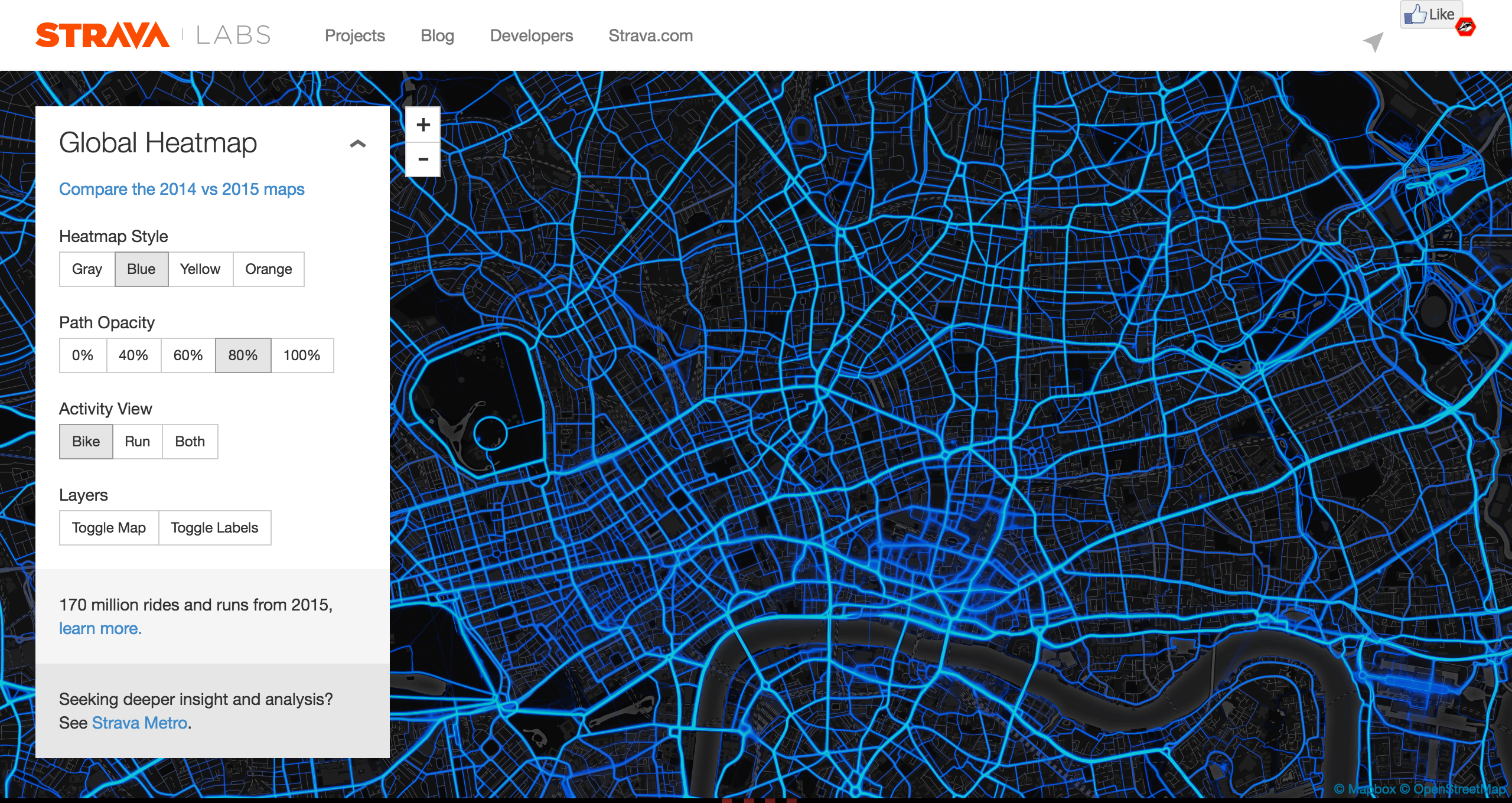
Should main roads be the priority? They’re affected by roadworks and constructions, and by the city growth and change in general.
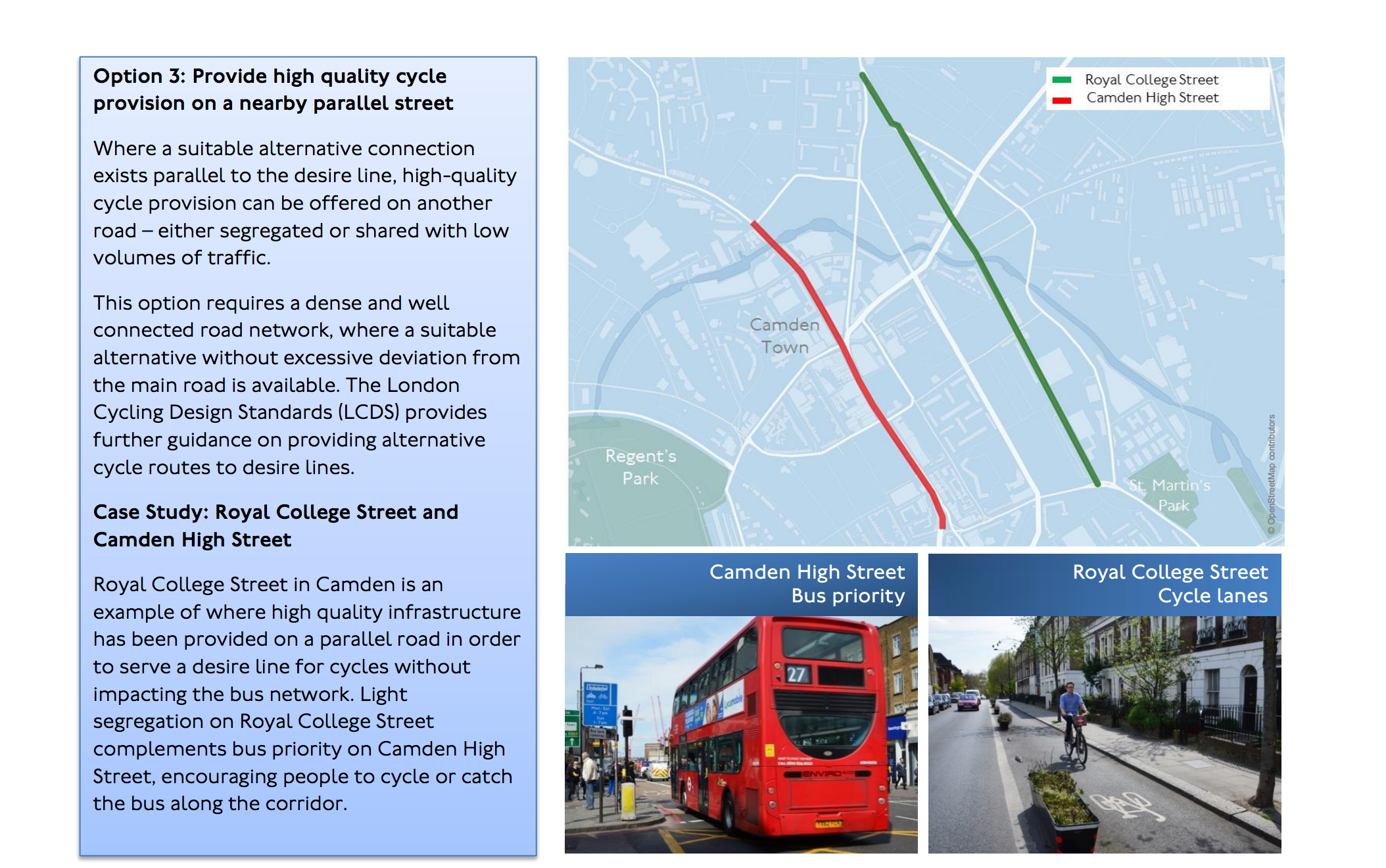
Side roads and Quietways seem all around safer spaces that could draw more casuals to pick up their bike in the morning, instead of high-speed Superhighways and scary segregated lanes, where congestion, cars turning, and bus stop crossings are hazardous bottlenecks.